Can you waterproof a bathroom without removing tiles? In suitable cases, yes—but only when the water source and site condition suit the method. “No hacking” does not mean covering the floor with a quick surface coating. A proper solution must address how water is entering and moving through the floor or wall system.
How to waterproof a bathroom without removing tiles
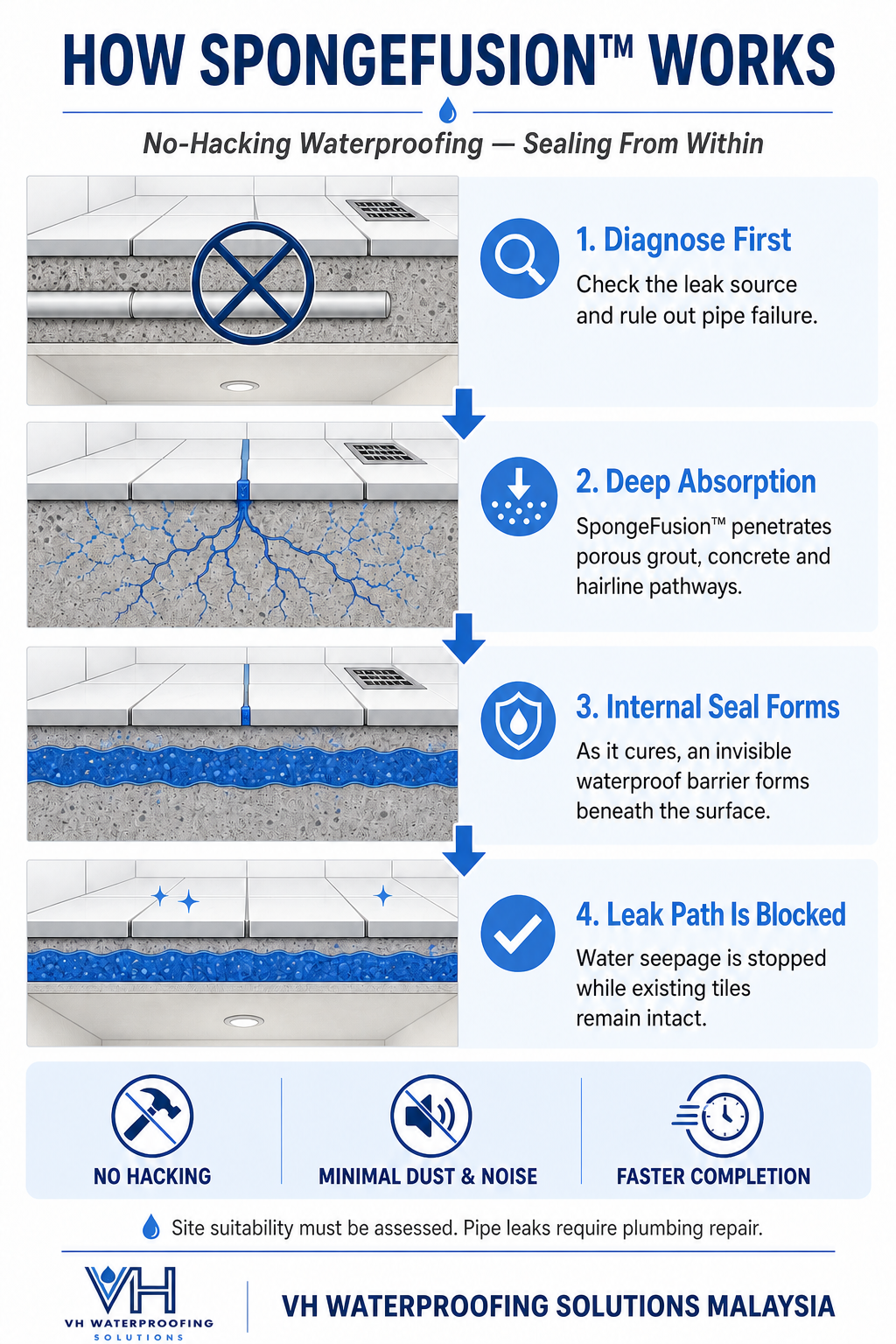
A penetrative waterproofing treatment is applied to prepared porous areas such as grout and concrete. The material moves below the visible surface and forms protection within vulnerable pathways. This can avoid breaking tiles, removing screed and rebuilding the bathroom floor.
When it may be suitable
- Water seepage is associated with the bathroom floor or grout area.
- The existing tiles are generally stable and worth retaining.
- There is no active concealed-pipe failure that must be opened and repaired.
- The owner wants to reduce dust, noise and downtime.
- An inspection indicates that a penetrative treatment can reach the relevant area.
When tile removal may still be necessary
No-hacking treatment cannot solve every defect. Loose or hollow tiles, badly damaged screed, major cracks, leaking concealed pipes, incorrectly constructed falls or widespread structural movement may require opening the area. A responsible contractor should explain these limitations rather than promise one method for every leak.
No-hacking treatment versus surface sealers
A clear surface sealer mainly sits near the top of the tile or grout. A penetrative system is intended to work beneath the surface in porous materials. Product type, preparation, application and curing all affect performance, so homeowners should ask what is being treated—not just whether the product is “transparent.”
What happens during an assessment?
The contractor should ask where water appears, when it becomes worse, how the bathroom is used and whether plumbing has been checked. The condition of grout, joints, traps, walls and tiles should also be reviewed. For a condominium leak, access to the ceiling below may provide valuable evidence.
Benefits for occupied homes
- Existing tiles can often remain.
- Less demolition waste, noise and dust.
- Shorter interruption to the household.
- Lower risk of mismatched replacement tiles.
Frequently asked questions
Does regrouting alone waterproof a bathroom?
Regrouting may improve the surface, but grout is not normally the complete waterproofing system. The underlying cause should be identified first.
Can the method treat toilet leaks?
It may suit water seepage through the wet-area floor, but toilet pan, pipe and fitting leaks require the relevant plumbing repair.
See how VH Waterproofing approaches no-hacking waterproofing in Malaysia, or request an assessment for your bathroom.