
Bathroom waterproofing failure signs often develop quietly. By the time paint bubbles or a ceiling stain appears, moisture may already have travelled through grout, screed, wall junctions or the concrete slab. Early identification helps prevent repeated cosmetic repairs and wider property damage.
Seven bathroom waterproofing failure signs
- Water marks or peeling paint on the ceiling below a bathroom.
- Dampness on a wall adjoining a toilet or shower.
- Recurring mould or a musty smell despite normal ventilation.
- Loose, cracked or persistently wet grout.
- Swollen skirting, door frames or cabinetry outside the wet area.
- Efflorescence—white powdery mineral deposits—on walls or ceilings.
- A leak that becomes worse after showering or washing the bathroom floor.
Waterproofing failure or plumbing leak?
Timing provides useful clues. Leakage that follows shower use may point to the shower floor, wall junction or drainage zone. Constant moisture, even when nobody uses the bathroom, may indicate a pressurised water pipe. Leakage during toilet flushing may involve the pan connector, cistern or waste line. These clues are not a final diagnosis, but they guide the inspection.
Simple checks homeowners can make
- Photograph stains over several days to see whether they grow.
- Note which bathroom activities happen before moisture appears.
- Check visible supply hoses, traps and sealant joints.
- Avoid covering the evidence with new paint before inspection.
- In a condominium, notify management and coordinate access to the affected unit.
What not to do
Do not assume that filling one grout crack solves the waterproofing system. Avoid repeatedly applying random sealers, because layers of incompatible material can make later preparation harder. Most importantly, do not ignore electrical fittings near damp ceilings or walls; isolate the area and seek qualified help when electrical safety may be affected.
How professionals narrow down the cause
A useful inspection combines the moisture pattern, bathroom usage, plumbing condition and construction details. Depending on the site, controlled tests may be recommended. The goal is to separate plumbing, waterproofing, drainage and external-water causes before choosing a repair.
Repairing the waterproofing
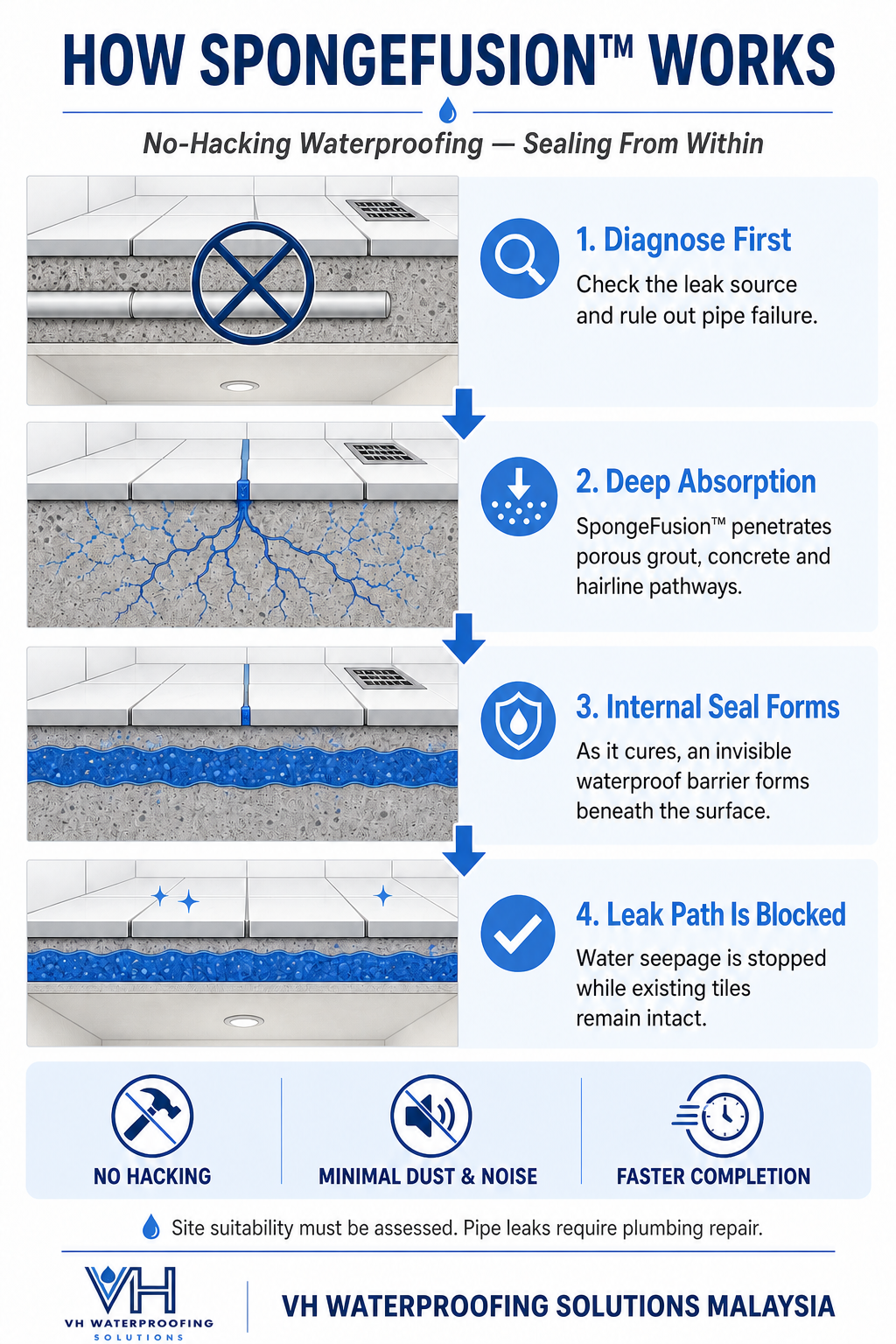
If the floor system is stable and the leak path is suitable, no-hacking waterproofing may preserve the tiles and reduce disruption. Serious substrate, pipe or structural defects may still need the area to be opened.
Frequently asked questions
Can mould alone prove there is a waterproofing leak?
No. Condensation and poor ventilation can also cause mould. Look for moisture patterns and obtain an inspection.
Can a small leak wait?
Small visible symptoms can come from a larger hidden moisture path. Early investigation usually gives you more repair options.
Describe your leak and request an assessment from VH Waterproofing.